Category: How to Guides

  • How to winterize your caravan guide

    How to winterize your caravan guide

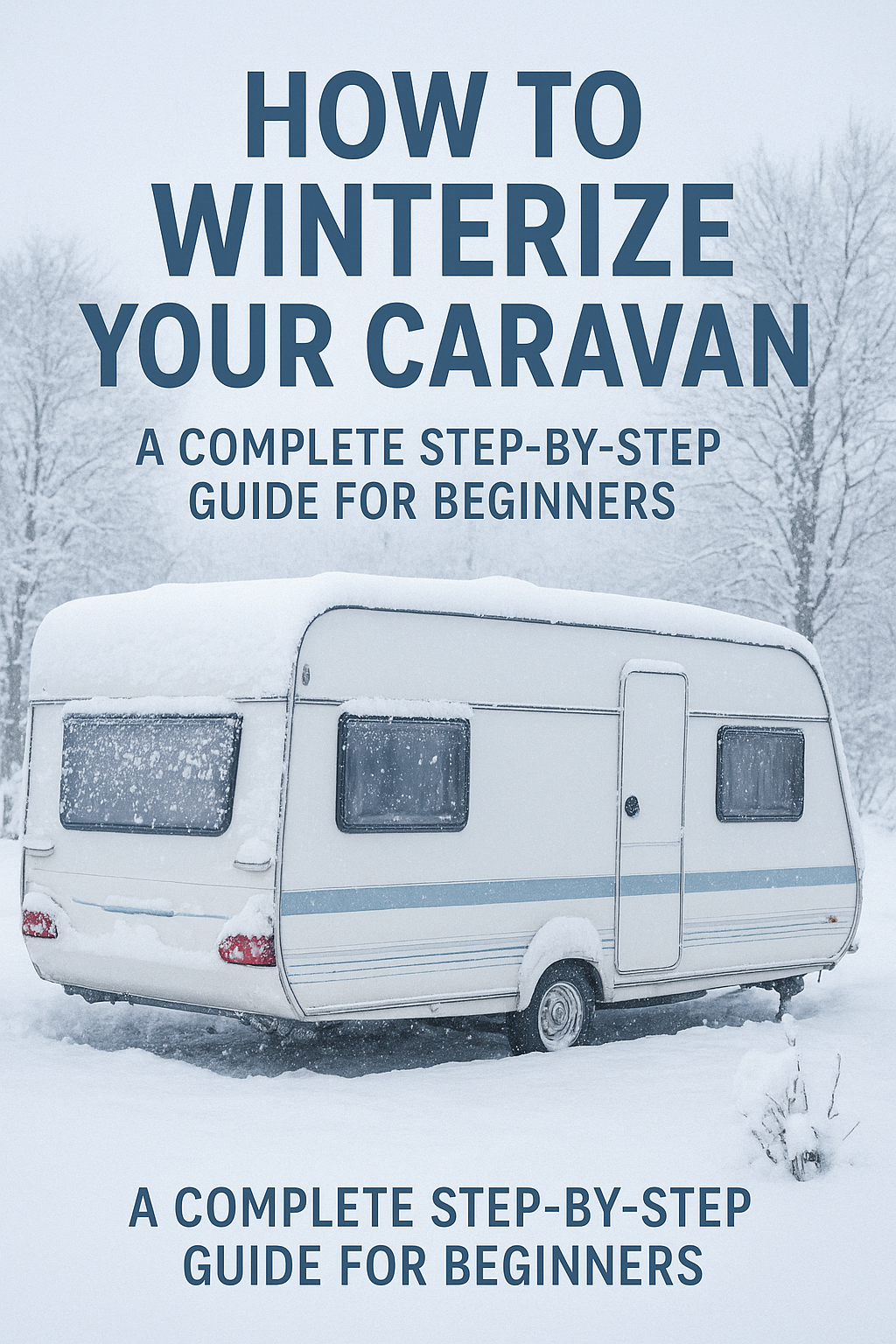
    How to Winterize Your Caravan: A Complete Step-by-Step Guide for Beginners

    If you’re a proud caravan owner, you know it brings endless freedom and joy throughout the spring and summer months. But when colder weather rolls in, winterizing your caravan is essential to protect it from frost damage, damp, mould, and wear caused by long periods of storage.

    Whether you’re storing your caravan on your drive, in a storage facility, or even using it occasionally through winter, this step-by-step beginner’s guide will walk you through exactly how to winterize your caravan—safely and confidently.


    Why Winterizing Your Caravan Is Essential

    Before diving into the practical steps, let’s quickly cover why winterizing matters:

    • Prevents frozen and burst water pipes
    • Avoids damage to pumps, boilers, and water systems
    • Stops build-up of mould, mildew, and bad smells
    • Prolongs battery life and prevents electrical faults
    • Saves costly repairs come springtime

    Even if you’re planning a few winter trips, these steps will help keep your caravan in tip-top condition in between outings.


    What You’ll Need

    Contains Affiliate links below

    Here are the tools and materials you might want to gather before starting:

    • Towels and cloths
    • Water container for draining
    • Caravan water pump and plug removal tools
    • Caravan antifreeze (non-toxic for use in waste systems—not for drinking water!)
    • Moisture absorbers or dehumidifiers
    • WD-40 or silicone spray
    • Vacuum and cleaning products
    • Battery charger/monitor
    • Insulated covers for vents/chimneys (if storing outside)
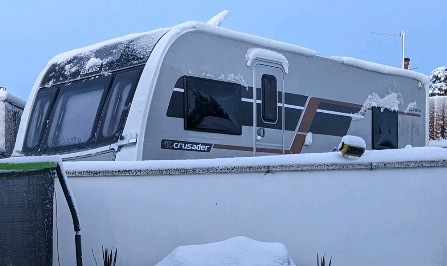
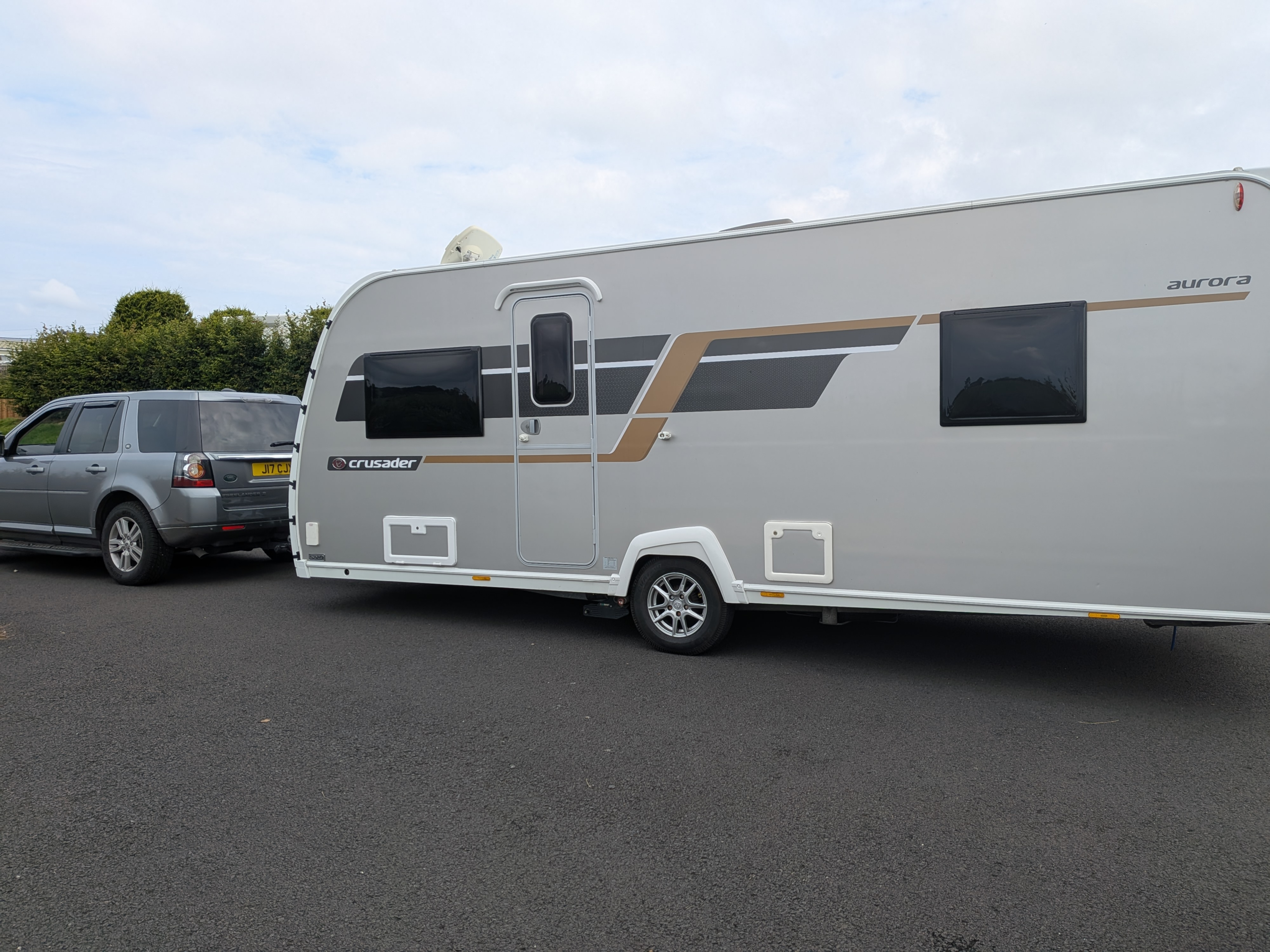
    A snow covered Elddis Crusader Aurora caravan parked behind a wall in winter
    Elddis Crusader Aurora caravan dusted with snow on a cold winter’s day

    Step-by-Step Guide to Winterizing Your Caravan


    Step 1: Deep Clean the Interior

    Before shutting up your caravan for weeks or months, give it a good clean.

    • Empty all cupboards and remove food: Even sealed packets can attract pests.
    • Wipe down all surfaces, including kitchen units, table tops, and bathroom fixtures.
    • Vacuum thoroughly: Especially around beds and seating where crumbs gather.
    • Clean the fridge/freezer: Leave the door ajar and place a cloth inside to absorb moisture.
    • Empty and clean bins and toilet cassette.

    Tip: Add a dish of bicarbonate of soda inside the fridge to absorb smells.


    Step 2: Drain Down the Water System

    One of the most important steps. Water left in pipes, tanks, or appliances can freeze and cause serious damage.

    How to Drain the Water System:

    1. Turn off the water pump and heater:
      • Ensure both are off and disconnected from power.
      • Let the boiler cool if it was recently used.
    2. Open all taps and shower heads:
      • Open both hot and cold sides of the mixer taps.
      • Remove any showerheads and leave the hoses hanging down.
    3. Open the drain valve (usually found near the onboard water tank or under the floor):
      • This allows the water to run out completely.
      • You may want to place a bucket or container underneath if you’re not on a service pitch.
    4. Blow out remaining water (optional but recommended):
      • You can use a low-pressure air pump or specialist device to force air through the pipes.
      • Alternatively, lift and lower the tap heads to help any water droplets run down.
    5. Empty and clean the toilet flush system:
      • Remove flush water from the header tank if separate.
      • Drain the cassette completely and clean it using a cassette cleaner.
    6. Use non-toxic caravan antifreeze (only for waste tanks or traps):
      • Pour a little into each plughole, shower trap, and the toilet to prevent seals drying out and freezing.
      • Do not use antifreeze in drinking water tanks or pipes.

    Tip: Leave all drain valves open until spring and remove water filters if installed.


    Step 3: Ventilation Is Key

    Contrary to instinct, sealing your caravan too tightly can cause condensation and damp.

    • Leave internal doors and cupboards open to allow air flow.
    • Lift up cushions and mattresses and store them on their sides or at an angle.
    • Use moisture traps or dehumidifiers (silica crystal types are good for winter).
    • Keep roof vents slightly open with vent covers to prevent snow/rain ingress.

    Tip: If storing your caravan indoors or undercover, consider removing soft furnishings entirely.


    🔌 Step 4: Disconnect and Maintain the Battery

    Caravan leisure batteries hate cold and inactivity. Here’s how to protect yours:

    1. Disconnect the battery from the caravan entirely.
    2. Store it indoors or in a dry, frost-free location.
    3. Charge every 4–6 weeks or use a smart charger with a maintenance mode.
    4. Check voltage regularly using a battery monitor or voltmeter (keep above 12.4V ideally).

    Tip: Never leave a discharged battery through winter—it shortens lifespan significantly.


    Step 5: Exterior Protection and Sealing

    Your caravan’s bodywork, seals, and exterior fittings also need winter protection:

    1. Wash and wax the exterior:
      • Remove grime, algae, and black streaks.
      • Use a quality caravan-safe wax to repel moisture.
    2. Inspect all seals around windows, doors, skylights, and vents:
      • Apply a silicone lubricant or rubber seal conditioner if needed.
    3. Lubricate locks, hinges, and corner steadies:
      • Use WD-40 or specialist spray to prevent seizing up.
    4. Fit wheel covers and levelling blocks:
      • Helps avoid flat spots on tyres.
      • If possible, rotate wheels monthly or move the van slightly.
    5. Use a breathable caravan cover:
      • Don’t use tarps or plastic sheeting—they trap moisture.
      • Ensure cover fits well and allows for airflow.

    Tip: If on a seasonal pitch, raise your jockey wheel and stabilisers slightly to keep the chassis from sitting in wet ground.


    Step 6: Clean and Protect the Toilet System

    Often forgotten—but crucial!

    • Empty the toilet cassette completely.
    • Rinse with a toilet tank cleaner to remove limescale and sludge.
    • Lubricate the seals using silicone spray.
    • Leave the blade slightly open to prevent it sticking over winter.

    Tip: Never use domestic bleach—it damages seals.


    Step 7: Secure and Store Safely

    When your caravan’s ready for storage, don’t forget these final steps:

    • Remove all valuables including electronics, TVs, and satellite dishes.
    • Close blinds/curtains halfway to prevent sun fading but allow visibility (to show it’s empty).
    • Lock all windows and doors and double-check security devices.
    • Engage wheel clamps, hitch locks, and alarms.
    • Check insurance requirements for winter storage.

    Tip: If you store your caravan at home, consider motion-sensor lights or a tracker for added security.
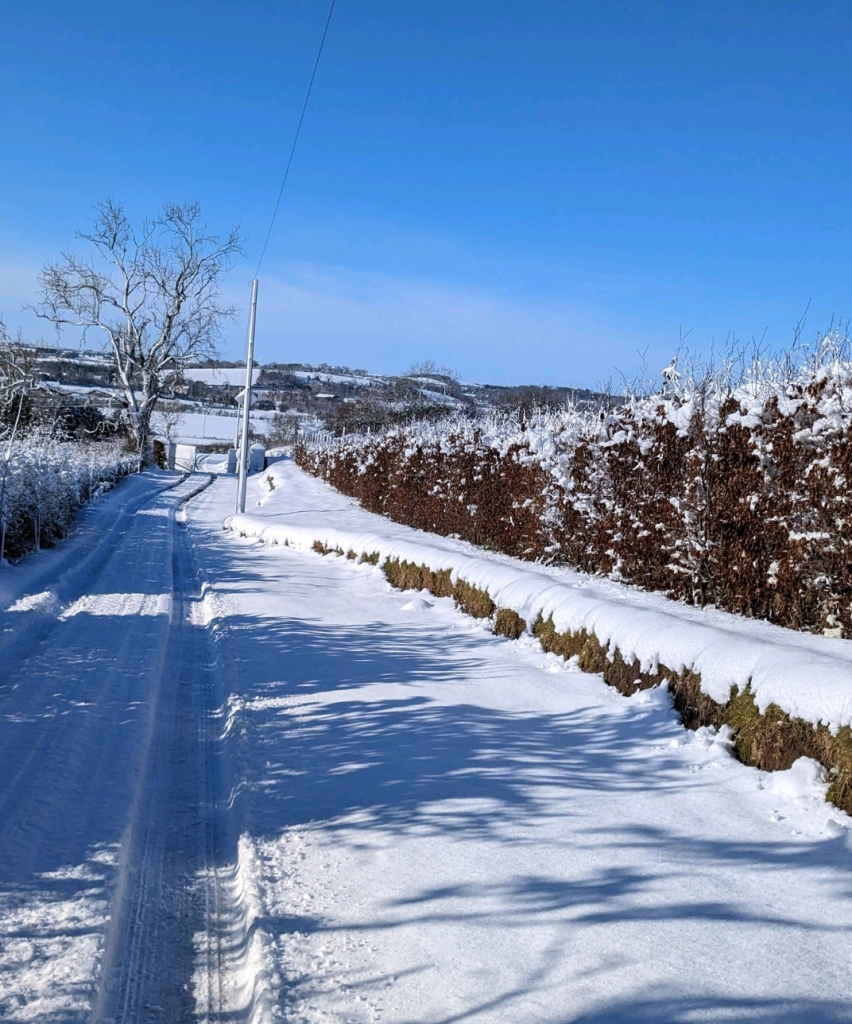
    A narrow country road covered in snow, with hedgerows and a bare tree under a clear blue sky
    Snow covered country lane glistening beneath bright winter sunshine

    What NOT to Do When Winterizing

    Let’s cover a few common mistakes to avoid:

    Mistake Better Option
    Leaving food or crumbs insideRemove all food and clean thoroughly
    Sealing every vent and windowMaintain airflow with covers and dehumidifiers
    Leaving the battery in place and flatRemove and maintain charge monthly
    Forgetting to open taps when drainingOpen all taps, showers, and drain valves
    Using domestic antifreezeUse only non-toxic caravan-safe antifreeze
    Covering with a plastic tarpUse a breathable caravan cover

    Optional Extras for Winterizing Like a Pro

    If you want to go a step further, here are some winter accessories that make life easier:

    • Caravan breathable winter cover
    • Tyre savers and levellers
    • Solar trickle charger for battery
    • Portable dehumidifier or crystal traps
    • Tow hitch and wheel lock covers
    • Ventilation chimney cowls
    • Smart battery monitor (Bluetooth enabled)

    When Should You Winterize Your Caravan?

    Most people winterize their caravan between late October and early December, depending on when you stop touring. If you’re planning winter getaways (Christmas trips or New Year), simply repeat the draining steps between uses.


    Reversing the Process in Spring

    When you’re ready to hit the road again in spring:

    • Close all drain valves
    • Reconnect the water system
    • Sanitize the fresh water tank
    • Check for signs of damp or rodent entry
    • Reinstall the battery
    • Run checks on gas, electrics, and heating
    • Air out all soft furnishings

    Tip: A spring caravan service is well worth booking ahead!


    Final Thoughts: Protect Your Investment All Year Round

    Winterizing your caravan isn’t just for peace of mind—it protects your investment, ensures a long-lasting lifespan, and sets you up for stress-free touring come springtime.

    While the first time can feel a bit intimidating, following this simple guide makes the process easy. Once you’ve done it once, it becomes a routine task each year.

    So grab a hot drink, set aside an afternoon, and give your caravan the winter prep it deserves!
  • How to prep your caravan for a storm

    How to prep your caravan for a storm

    Storm-Ready: How to Prepare Your Caravan for Strong Winds (And Our Costly Lesson from a Stormy Night)

    There’s nothing quite like the sound of rain gently hitting your caravan roof while you’re snuggled inside, warm and dry. But when the wind starts howling and your awning flaps like a sail, things can quickly shift from cozy to chaotic.

    If you’re a fellow caravan lover like us—touring through all seasons, wind, rain, or shine—you’ll know that storms are an unavoidable part of life on the road (or even when you’re pitched up at home). We learned this the hard way a couple of years ago, when a freak storm hit and the neighbor’s shed roof came crashing down—straight onto our beloved caravan. We have also had some very hairy nights in Tollymore Forest Park in strong winds!

    That stormy night left us with dents, holes, and a serious lesson in storm preparedness.

    So today, I’m sharing everything we’ve learned about prepping your caravan for high winds, from awning safety to towing in storms, what to keep out of your “caravan garden,” and how to weatherproof your setup for peace of mind—whether you’re off-grid, on a site, or parked at home.


    Contents

    1. Why You Need a Storm Plan
    2. Real-Life Storm Damage: Our Caravan vs. The Flying Shed Roof
    3. Wind Ratings on Awnings (And When to Take Them Down)
    4. Securing Your Caravan Setup Before a Storm
    5. Storm-Proofing Your Caravan “Garden”
    6. Towing Your Caravan in Windy Conditions
    7. Staying Safe Inside the Caravan During a Storm
    8. Insurance Tips After a Storm
    9. The Emotional Toll of Caravan Damage
    10. Final Thoughts: What We Do Differently Now

    1. Why You Need a Storm Plan

    Caravans may be our little home-on-wheels, but let’s face it—they’re not built like brick houses. Wind can be incredibly destructive, especially to lightweight materials like caravan panels, roof vents, awnings, and outdoor accessories.

    Whether you’re touring full-time or simply use your caravan for holidays, having a storm plan is just as essential as your packing checklist. That includes:

    • Knowing your awning’s wind limits
    • Checking weather warnings before travel
    • Knowing when to pack up and move
    • Keeping your surroundings clear of hazards

    You never think it’ll happen to you—until it does.


    2. Real-Life Storm Damage: When a Shed Roof Hit Our Caravan

    Let’s rewind two years. We were at home with our caravan parked in the driveway, just back from a weekend away. There were strong winds forecast, but nothing out of the ordinary for Northern Ireland these days!

    That night, the wind got stronger and stronger then a gust caught our neighbor’s old garden shed roof panel, and the roof panel lifted off like a lid on a tin can. It flew across the wall and slammed into the side of our caravan with terrifying force.

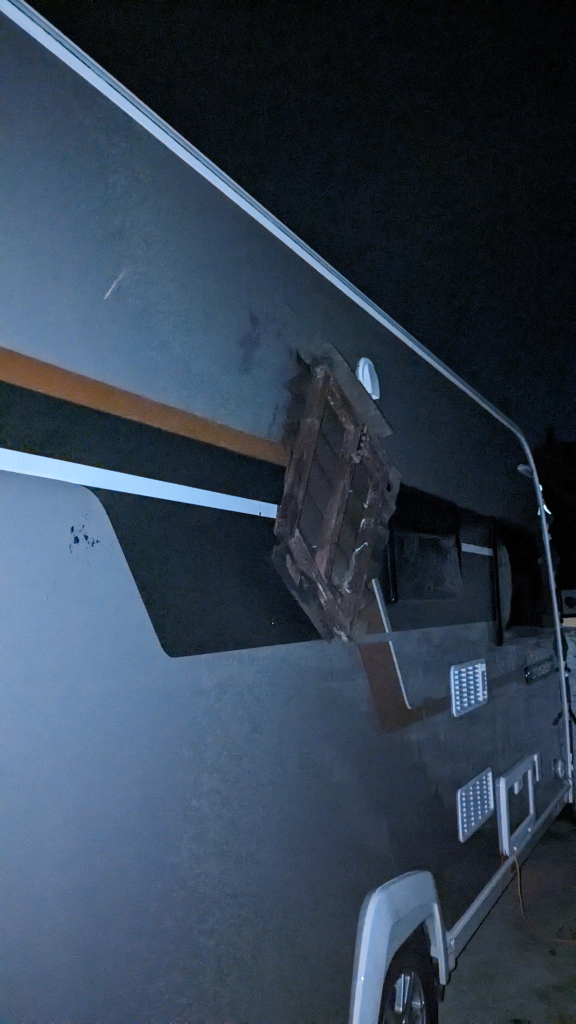
    We heard the bang from inside the house, and ran out with torches. I’ll never forget the sinking feeling when we saw the side of our van—a panel of a shed roof stuck into the side of the van with several dents all over where the roof had hit. It dented part of the panel and put a hole in the side of the van.


    Storm Damage during the storm
    Storm Damage during the storm

    3. Wind Ratings on Awnings: Know Your Limits

    Awnings are one of the most vulnerable parts of a caravan setup during storms. Even premium air awnings have wind ratings, and once you exceed those, they become a liability—not a luxury.

    Here’s a rough guide:

    • Light wind (up to 15 mph / 24 km/h): Most awnings are fine
    • Moderate wind (15–25 mph / 24–40 km/h): Pegs and guy lines must be secure
    • Strong wind (25–35 mph / 40–56 km/h): Consider removing fabric panels
    • Gale force (35+ mph / 56+ km/h): TAKE DOWN your awning completely

    Even storm straps and heavy-duty poles can’t guarantee safety in a true storm. We now err on the side of caution—if winds are forecast above 30mph, the awning comes down.

    Tip: Use a wind speed app like Windy or the BBC/Met office Weather app to check your location forecasts daily when touring.


    4. Securing Your Caravan Setup Before a Storm

    Whether you’re pitched on a site, in your garden, or parked on a CL, you should always do a pre-storm check. It doesn’t have to be complicated, just thorough.

    Caravan Storm Checklist:

    Awning removed or properly storm-strapped
    All skylights and roof vents tightly shut
    TV aerial down and secured
    Chocks and steadies in place
    Windows and doors locked
    Loose outdoor items packed away
    Water containers and waste tanks emptied or secured
    Check caravan cover (if used) is tight and not flapping
    Solar panels secure

    Don’t forget your motor mover battery! If it’s loose or under strain, high winds can shift your van even when parked. We now have a battery monitor installed for extra peace of mind.

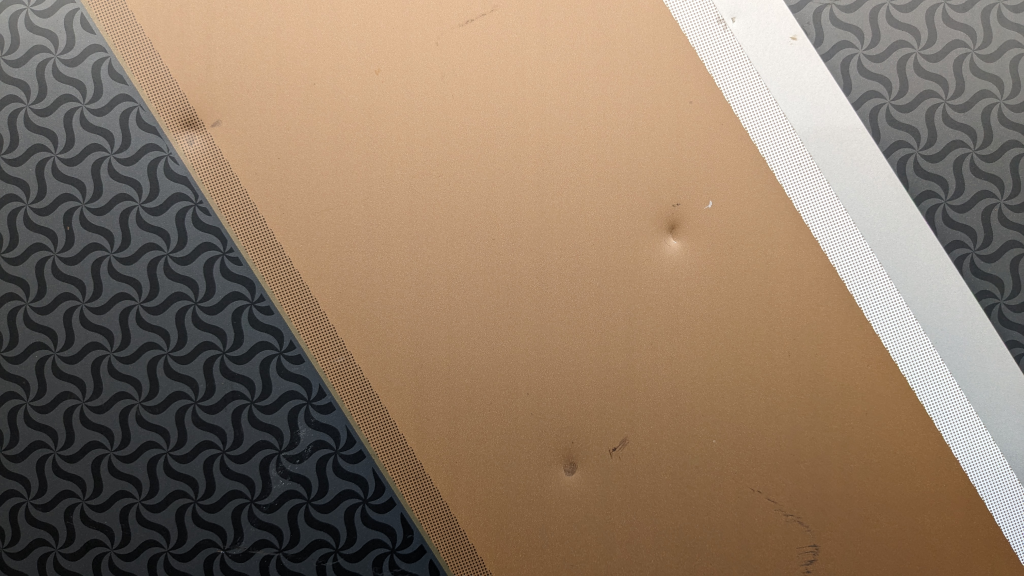
    Dents from roof panel hitting our van
    Dents from roof panel hitting our van

    5. Storm-Proofing Your Caravan “Garden”

    We all love setting up an outdoor space with chairs, rugs, plants, and little personal touches—but in a storm, these become flying projectiles.

    Two years ago, we had planters, a small gas BBQ, and a garden gnome out. Luckily, we brought them in. Our neighbor didn’t, and we ended up with a plastic garden table smashed against the fence too.

    Before a Storm, Secure or Store:

    • Garden furniture (especially lightweight plastic)
    • Plant pots or planters
    • Dog bowls and toys
    • Portable BBQs and gas bottles
    • Fairy lights or solar stakes
    • Bikes or scooters
    • Steps and storage boxes

    Everything should either be stowed inside the caravan or locked down tightly with ratchet straps or bungee cords.


    6. Towing in Windy Conditions: Yes or No?

    Towing a caravan in wind is not only difficult—it’s dangerous. Even the most experienced towers know that crosswinds are a serious threat on open roads and motorways.

    Avoid towing if possible when:

    • Wind speeds are over 30mph
    • Crosswinds are expected
    • The Met Office issues yellow or red warnings

    If you must tow:

    • Reduce speed
    • Keep both hands on the wheel
    • Ensure your caravan is loaded correctly (low and central)
    • Use towing mirrors like our trusty Emuk XLs
    • Avoid overtaking lorries in side winds

    We once towed in 30/40mph winds on a rural route and it was white-knuckle stuff. Never again. If in doubt—stay put.


    7. Staying Safe Inside the Caravan During a Storm

    If you’re already pitched and a storm hits unexpectedly, don’t panic—but do take precautions.

    Do:

    • Close all windows and rooflights
    • Secure blinds and curtains
    • Turn off gas appliances
    • Keep torches handy
    • Charge devices in case of power outage
    • If safe, move your car to block wind from the side of the van

    Don’t:

    • Don’t venture outside if you dont have to
    • Leave children or pets unattended
    • Use BBQs or gas heaters indoors (carbon monoxide risk)

    We now keep a storm box in the van: torch, batteries, phone charger, first aid kit, a blanket, and emergency snacks. Peace of mind in one crate.


    8. Insurance Tips After a Storm

    If your caravan suffers damage, the insurance process can feel daunting—but it’s easier if you’re prepared:

    After Storm Damage:

    1. Photograph everything immediately
    2. Note time/date/weather conditions
    3. Don’t move anything until you’ve documented it
    4. Call your insurance and ask about approved repairers
    5. Save receipts for any emergency fixes

    Make sure your caravan insurance includes storm cover and accidental damage, even when parked at home. Also make sure you have the caravan insured for the right amount to.


    9. The Emotional Toll of Caravan Damage

    As much as we focus on practical prep, there’s an emotional side to all of this, too. If you’re anything like us, your caravan is more than just a vehicle—it’s your getaway, your sanctuary, a space full of family memories.

    Seeing it damaged was honestly heartbreaking. We were angry, worried, and felt helpless. Although it was very much stressful it also taught us how resilient caravanners are, and how many lessons you only learn through experience.

    It’s OK to be shaken by storm damage. What matters is how you move forward.


    10. Final Thoughts: What We Do Differently Now

    That storm changed how we caravan—especially in winter and autumn. We’re now vigilant with forecasts, we never leave the awning up in windy conditions, and we regularly check our surroundings for anything that could turn airborne.

    Our New Must-Dos Before Any Storm:

    Take down the awning
    Store away anything light
    Double check rooflights, windows, vents
    Move the car to shield the van
    Set internal supports (especially for skylights)
    Charge devices and grab our storm box

    And every time a strong wind hits now, we’re grateful we learned our lesson the hard way—because we’ll never take the weather for granted again.

  • How to level a caravan

    How to level a caravan

    How to Level a Caravan for Beginners – A Complete Step-by-Step Guide (With Dos and Don’ts)

    Leveling your caravan is one of the most important tasks to master as a new caravanner. Whether you’re setting up on a touring pitch, a CL site, or wild camping for the night, making sure your caravan is perfectly level ensures your appliances work properly, water flows correctly, and—most importantly—you sleep comfortably.

    In this beginner-friendly guide, we’ll walk you through exactly how to level your caravan step by step, explain how to check if it’s level, and cover the common dos and don’ts to avoid mishaps. Let’s get you leveled up—literally!


    Why Is It Important to Level Your Caravan?

    Before diving into the how-to, let’s understand the “why.”

    A level caravan helps to:

    • Ensure your fridge works efficiently (especially absorption fridges)
    • Prevent shower trays and sinks from overflowing
    • Avoid strain on chassis and stabiliser legs
    • Improve sleep quality with a flat bed
    • Prevent doors from swinging open or closed
    • Keep cupboard items and water tanks in balance
    • Stop water pooling on flat surfaces

    Even a slight slope can be noticeable when you’re inside the van—especially at night or when cooking.


    What You’ll Need to Level Your Caravan

    Here’s a checklist of basic leveling tools:

    Essential Equipment:

    • Caravan spirit level (bubble or digital)
    • Wheel ramps/chocks
    • Levelling blocks or mats
    • Caravan jack (optional)
    • Corner steadies (already fitted on most caravans)
    • Winding handle or cordless drill with corner steady adaptor
    • Motor mover (optional but makes life easier)
    • Torque wrench (for re-tightening wheel nuts if needed)
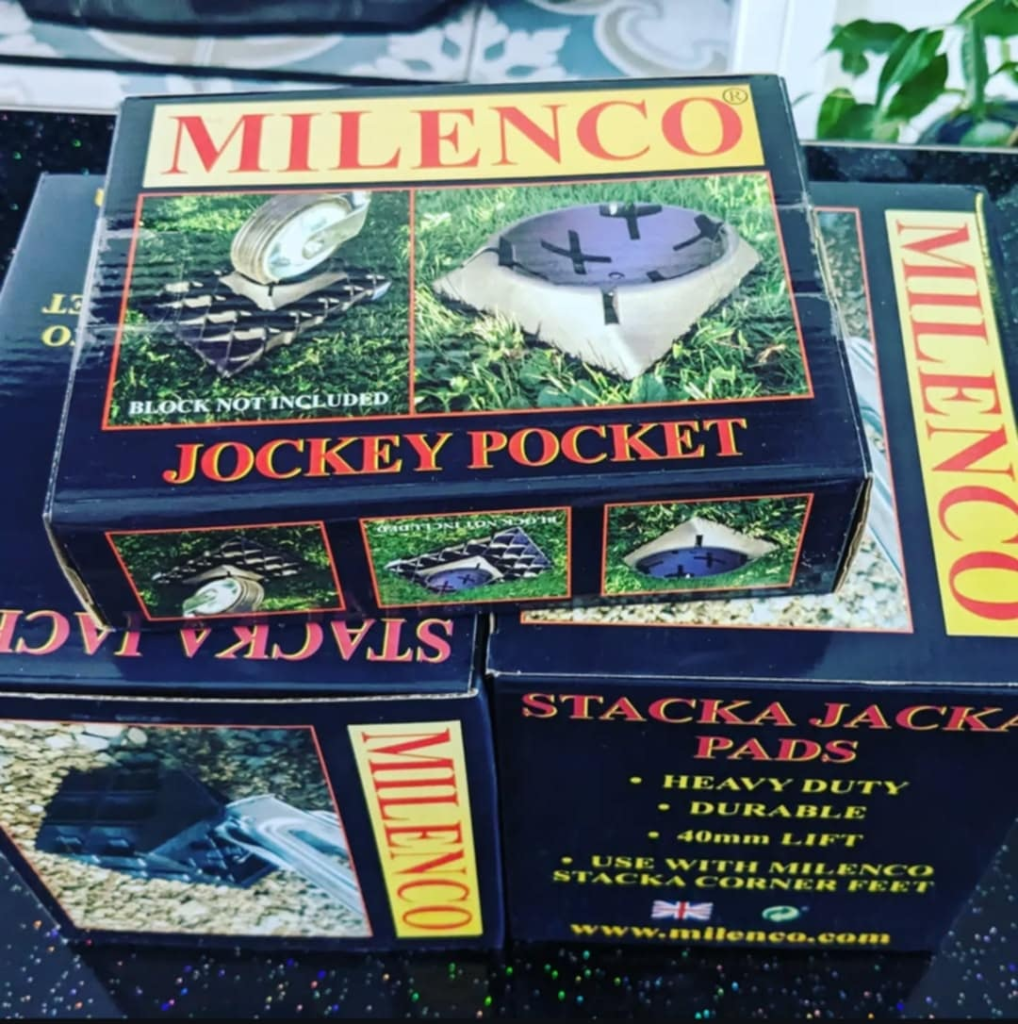
    Milenco stacka jack pads
    Milenco stacka jack pads

    The ones we use are Milenco Stacka Jacks pads these work well with the Milenco Stacka Corner feet you can also get the Milenco Jockey wheel pad (Contains Affiliate links)


    Step-by-Step Guide to Leveling a Caravan

    Let’s break the process into three main phases:

    1. Side-to-side leveling
    2. Front-to-back leveling
    3. Final steadying

    Step 1: Choose Your Pitch

    When you arrive on-site, first choose a pitch. Some are naturally level, others are sloped or uneven.

    Top tips for choosing the right spot:

    • Walk around and visually assess the ground slope.
    • Choose a pitch with minimal gradient if you can.
    • Avoid soft or boggy ground.
    • Check access to electric hook-up and facilities.

    Step 2: Side-to-Side Leveling (Axle Axis)

    This is the first and most important step because it’s the hardest to adjust once the caravan is unhitched.

    Instructions:

    1. Place a spirit level on the caravan floor, ideally across the axle or kitchen worktop (width-wise).
    2. If the bubble isn’t centred, raise the lower side using a levelling ramp.
    3. Drive slowly onto the ramp (or use your motor mover) until the bubble is centered.
    4. Place chocks behind the wheel once level, to prevent rolling.

    Optional: If the ramp is too steep, use leveling blocks to raise in stages.

    Don’t use corner steadies to lift the caravan side-to-side—they’re not designed for this and can cause damage.

    Caravan Levelling Ramps ~ Affliate link


    Step 3: Chock Your Wheels

    Once you’re level side-to-side, place a wheel chock behind (and in front if needed) the wheels to prevent any movement.

    If you’re on a steep pitch or if the ground is loose (gravel, grass), double-chock both sides.


    Step 4: Unhitch the Caravan (If you didnt use motormover or pushed into place) Skip to step 5 if so.

    Now that you’ve secured the side-to-side leveling, it’s time to unhitch.

    Steps:

    1. Apply the caravan handbrake.
    2. Disconnect the electrics and breakaway cable.
    3. Lower the jockey wheel and wind it down until it touches the ground.
    4. Unhitch the tow ball and drive the car away.
    5. Use the jockey wheel to support the caravan front.

    Tip: Always double-check the handbrake is on before driving away.


    Step 5: Front-to-Back Leveling (Longitudinal Axis)

    Now use the jockey wheel to level the caravan front-to-back.

    Instructions:

    1. Place the spirit level lengthways on a flat surface (e.g. floor or worktop).
    2. Wind the jockey wheel up or down until the bubble is centered.
    3. When the front-to-back level is perfect, lock the jockey wheel into place.

    Pro Tip: A digital caravan leveller or phone app (like “Levelling Tool”) ~ Contains affiliate link, can help with precision.


    Step 6: Lower the Corner Steadies

    With the caravan now level, use the corner steadies to stabilise it.

    How to do it:

    1. Use a winding handle or cordless drill to wind each corner steady down until it contacts the ground.
    2. Apply light pressure to stabilise—do not lift the caravan with them!
    3. Use leveling pads or blocks underneath if the ground is soft or uneven.

    Don’t over-tighten steadies—it stresses the chassis and can twist the frame.

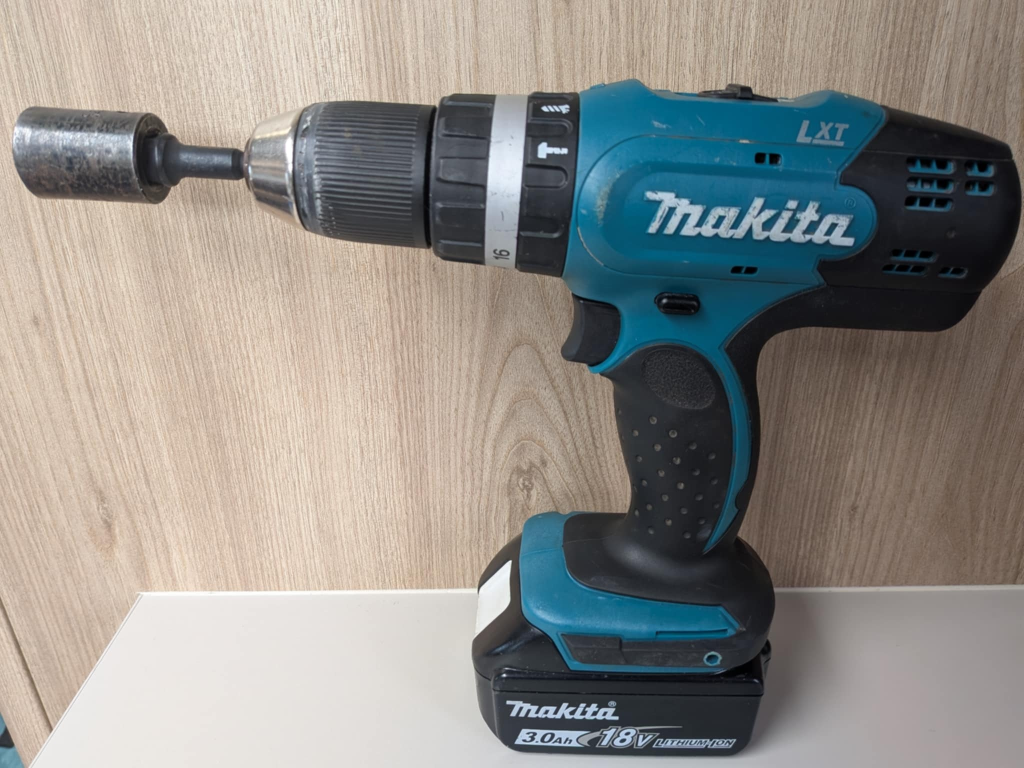
    The Drill we use is a Makita Cordless Drill with the Caravan leg winder socket (Contains Affiliate links)

    Makita Cordless drill with caravan steadies drill bit
    Makita Cordless drill with caravan steadies drill bit

    Step 7: Double-Check Everything

    Do a final walk-around:

    • Caravan is level both side-to-side and front-to-back
    • Wheels are chocked
    • Handbrake is applied (If your pitched on somewhere flat and no risk of it moving we keep the handbrake off to prevent it from seizing)
    • Corner steadies are down and secure
    • Jockey wheel is locked
    • Doors and windows open and close smoothly

    Common Mistakes to Avoid (Don’ts)

    New to caravanning? These are the most common leveling mistakes and how to avoid them:

    Don’t rely on corner steadies for lifting.
    They are for stability, not weight-bearing.

    Don’t skip leveling just because it “feels okay.”
    Your fridge and plumbing could be affected even with slight tilt.

    Don’t level on the jockey wheel first.
    Always level side-to-side before unhitching or use motormover.

    Don’t forget to chock the wheels.
    This can lead to rolling—dangerous and damaging!

    Don’t park nose-down on steep hills.
    It can overwork your handbrake and affect waste water drainage.


    Handy Leveling Tips (Dos)

    Use your spirit level before buying ramps.
    Every caravan is different—some need steeper or longer ramps.

    Label your ramps and chocks.
    Keep everything tidy in one box or bag marked “Leveling Kit.”

    Practice on your driveway or garden.
    Get familiar with your tools in a low-pressure setting.

    Upgrade to a motor mover.
    Leveling becomes much easier when you can fine-tune wheel positions without driving the tow car.

    Use a digital leveller app.
    Modern tools like Bluetooth levels or phone apps can give real-time guidance.

    Recheck your levels after a day.
    Weather and weight movement (e.g. water tanks filling) can affect balance.

    Invest in wide steadies if you camp off-grid.
    They’re better for grass and gravel pitches.

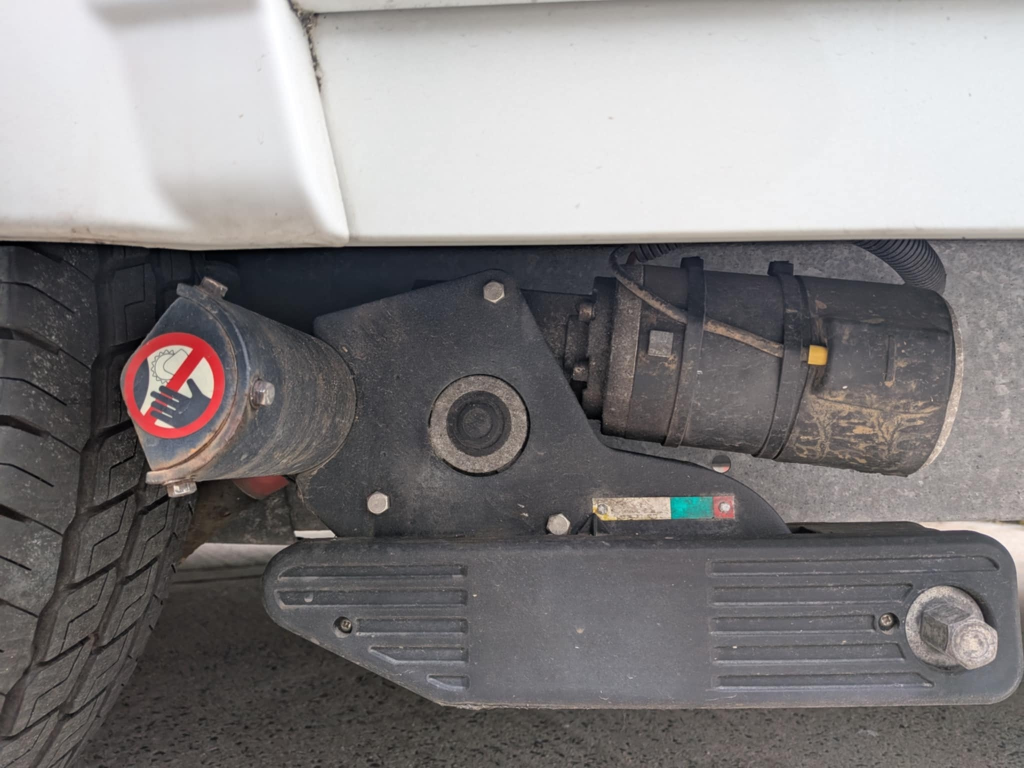
    Single axel motor mover caravan
    Single axel motor mover caravan

    Optional Tools That Make Leveling Easier

    If you find manual leveling tricky or time-consuming, here are some gadgets to consider:

    Motor movers – Allow you to drive the caravan onto ramps remotely.

    Digital leveling sensors – Sync with your phone to show real-time leveling data.

    Auto-levelling systems – High-end systems that electronically level your caravan at the push of a button.

    Spirit levels with magnets – Handy for sticking to the A-frame or inside door for a quick glance.


    Final Thoughts – Make Leveling Part of Your Routine

    Once you’ve done it a few times, leveling your caravan becomes second nature. It’s a vital part of setting up, and doing it right will improve your comfort, keep your appliances happy, and extend the lifespan of your caravan chassis and legs.

    Just remember: side-to-side first, chock securely, then front-to-back with the jockey wheel, and finally lower the steadies for stability. And never use the steadies to level the van!

  • How to keep dogs cool in a hot weather

    How to keep dogs cool in a hot weather

    How to Keep Dogs Safe and Cool in a Heatwave: Home & Caravan Tips for Pet Parents

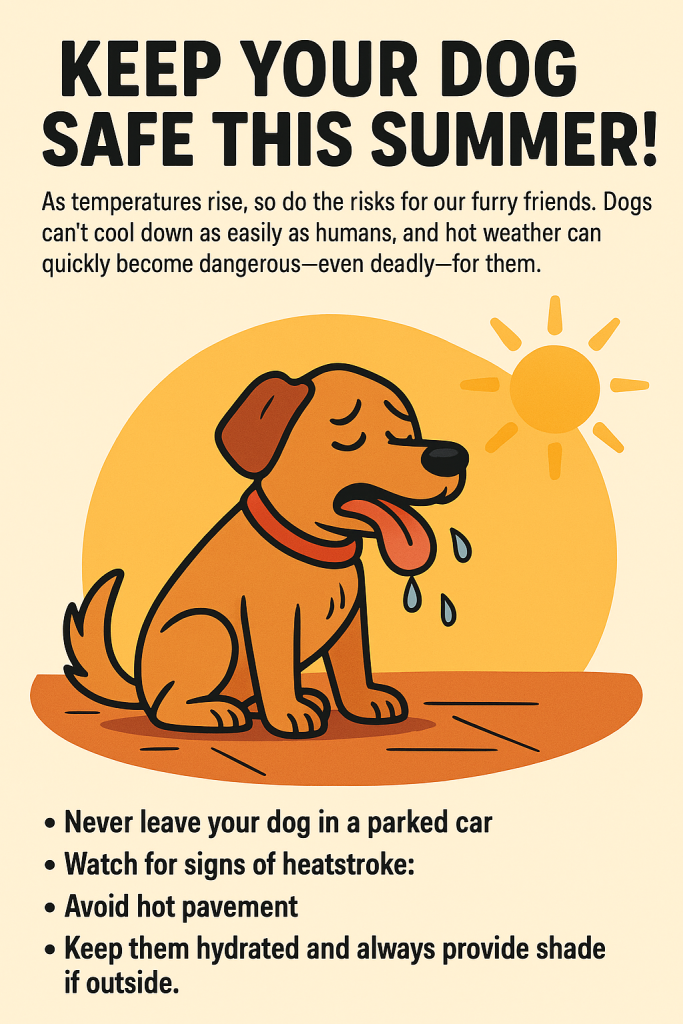
    As temperatures rise during the summer months, our canine companions are at risk of overheating. Dogs don’t sweat like humans, making them more vulnerable to heatstroke, dehydration, and sunburn. Whether you’re enjoying the summer sun at home, heading off in your caravan for an adventure, or just out and about, it’s crucial to know how to keep your dog cool and comfortable during a heatwave.

    In this comprehensive guide, we’ll explore everything you need to know about protecting your dog from extreme heat—including practical tips for staying cool in the caravan, travel safety, and which cooling accessories are worth investing in.

    Why Dogs Struggle in the Heat

    Dogs regulate their body temperature mainly through panting and a small amount through the pads of their paws. This makes it much harder for them to cool down during a heatwave, especially in enclosed environments like cars and caravans.

    Key risks of heatwaves for dogs:

    • Heatstroke (life-threatening if not treated)
    • Dehydration
    • Sunburn (especially on noses and ears)
    • Burned paws (from hot tarmac or sand)
    • Lethargy and vomiting

    Flat-faced breeds (like Pugs or Bulldogs), elderly dogs, puppies, and those with thick coats or health conditions are at even greater risk.

    Heatwave Dog Safety Tips at Home

    Even if you’re staying at home during hot weather, your dog needs extra care and attention. Here’s how to keep them safe:

    1. Keep Your Dog Indoors During Peak Heat

    Avoid letting your dog outside during the hottest part of the day (usually between 11 am and 4 pm). Instead, walk them early in the morning or after sunset when the ground is cool and the sun isn’t blazing.

    2. Create a Cool Zone

    Set up a cool retreat in your house:

    • Close blinds and curtains to keep the sun out
    • Use fans or air conditioning
    • Lay down damp towels for your dog to lie on
    • Place their bed on tile or laminate flooring

    3. Hydration is Key

    Provide fresh, clean water at all times. Add ice cubes to their bowl for an extra chill or use a dog-friendly water fountain to encourage drinking.

    4. Cooling Treats & Toys

    Try homemade doggie ice lollies using low-sodium stock or plain water with their favourite treats frozen inside. Offer cooling chew toys from the fridge or freezer.

    5. Limit Exercise

    It’s tempting to maintain routines, but strenuous exercise can be dangerous. Keep walks short and gentle, avoiding hilly routes or running.

    6. Check the Pavement

    Before heading out, test the pavement with your hand. If it’s too hot to hold your palm on it for 5 seconds, it’s too hot for paws.

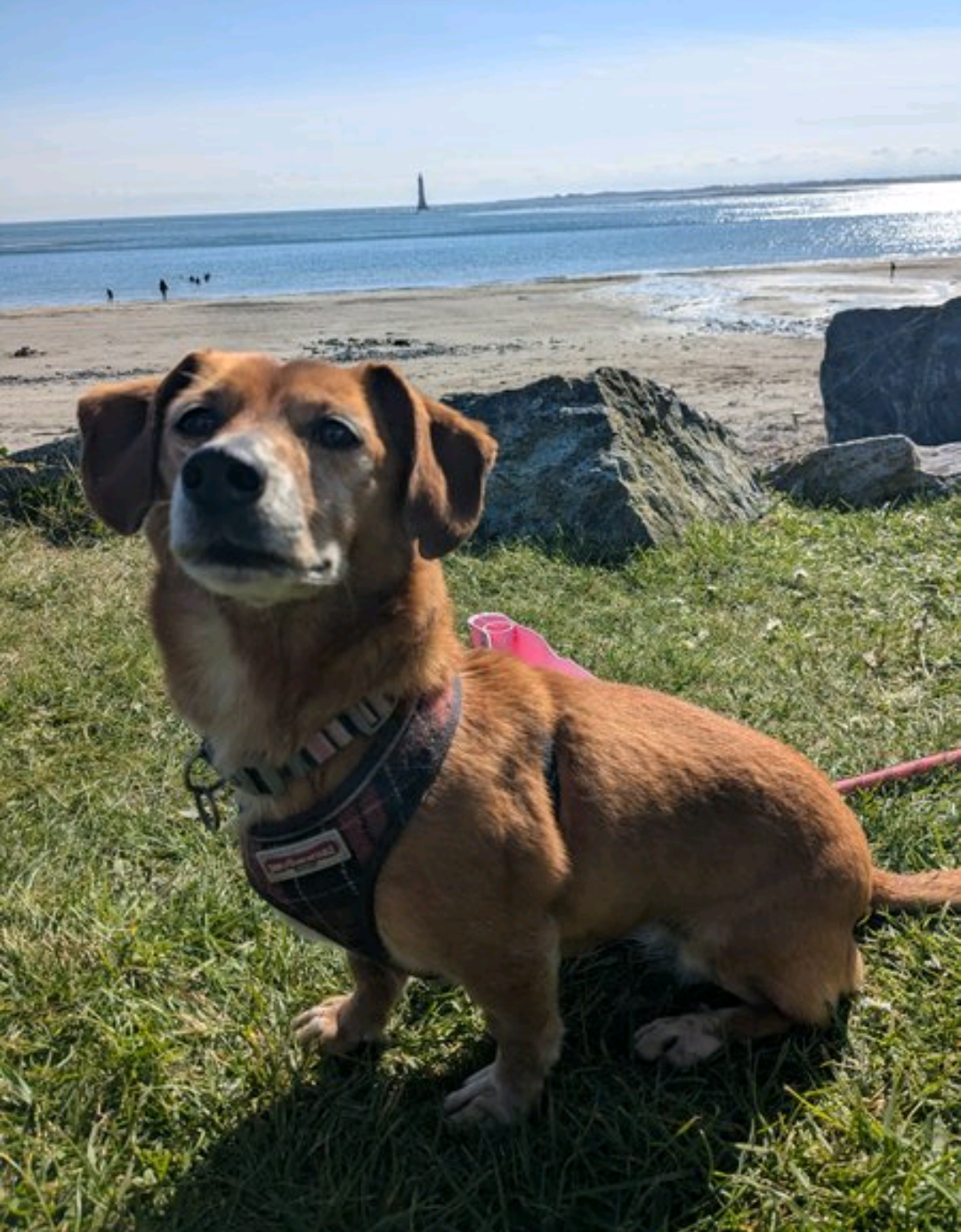
    Relaxing in the nice weather
    Relaxing in the nice weather

    Must-Have Accessories to Keep Dogs Cool

    Here are top-rated cooling accessories to invest in for home and travel:

    Product (Contains Affiliate Links below)Description
    Cooling MatsPressure-activated gel mats that cool down when your dog lies on them. No refrigeration needed.
    Cooling VestsLightweight and water-activated. Soak them in water and they cool your pup via evaporation.
    Portable Water BottlesIdeal for walks or road trips—bottles with attached bowls or flip-out troughs.
    Cool CoatsReflective or wet-to-wear jackets for walkies in hot weather.
    Pop-Up Shade TentsFor use in gardens, parks or campsites. Portable and breathable.
    Cooling BandanasTie around your dog’s neck for a refreshing and stylish heat-relief.

    Keeping Dogs Cool in a Caravan During a Heatwave

    Summer caravan trips with your dog can be unforgettable… but only if planned with their safety in mind. Caravans, like cars, can heat up quickly. Without proper precautions, they can become dangerous for pets in minutes.

    1. Never Leave Your Dog in the Caravan Unattended

    Just like in a car, a caravan can become an oven. Always take your dog with you or ensure the caravan is well ventilated, shaded, and monitored with a pet temperature alarm if you must leave them for a few minutes.

    2. Use Reflective Window Covers & Thermal Blinds

    Prevent heat from building up inside by fitting reflective blinds or blackout curtains. Roof light covers also help reduce sun exposure.

    3. Portable Fans & Cooling Systems

    Invest in 12V caravan fans or portable air conditioning units. Place them near your dog’s crate or favourite spot.

    4. Choose a Shaded Pitch

    When booking your campsite, request a pitch with natural shade or bring a caravan awning with UV protection to create a cool outdoor zone.

    5. Lay Cooling Mats Inside the Van

    Put them in your dog’s bed or where they usually sit. Some caravaners also use cold, damp towels refreshed throughout the day.

    6. Caravan Airflow Tips

    • Open roof vents and windows
    • Use flyscreens to keep bugs out
    • Keep interior doors open for better airflow

    7. Limit Midday Travel

    Plan your driving for cooler hours—early morning or evening. Use sunshades on the rear windows and ensure good ventilation in the tow car.

    Travel Tips for Dogs in Hot Weather

    Driving to your campsite? Here’s how to keep your pup comfy on the move:

    1. Pre-Cool the Car

    Start your air conditioning before loading your dog in. Never place your dog in a hot car that hasn’t been cooled down first.

    2. Harness and Secure Them Safely

    Use a car-safe harness, crate, or dog seatbelt to keep them secure and reduce stress.

    3. Offer Water Often

    Use spill-proof travel bowls or take regular stops to offer water. Hydration is vital during any road trip.

    4. Sunshades and Window Tints

    Cover side and back windows with sunshades or use tinted film to protect your dog from direct sunlight.

    Camping & Outdoor Activities with Dogs in a Heatwave

    If you love camping with your dog during summer, here are ways to enjoy it without risking their health.

    1. Stick to Early or Late Walks

    Cool morning strolls or evening adventures are best. Avoid strenuous hikes in peak heat.

    2. Bring a Travel Shade Tent

    Ideal for beach days or open field stops, a pop-up shade tent gives your dog a designated cool zone to rest.

    3. Check for Signs of Heatstroke

    Symptoms include:

    • Heavy panting
    • Excessive drooling
    • Lethargy
    • Vomiting
    • Confusion or wobbliness

    If your dog shows any of these signs, move them to a cool area, wet their coat, and contact a vet immediately.

    4. Cooling Towels on the Go

    Soak a towel in cool (not cold) water and drape it over your dog for instant relief.

    5. Paw Protection

    Use dog booties if you’re walking on hot sand or tarmac. Or stick to shaded paths and grass.

    Dog-Friendly Water Fun in the Heat

    Water activities are brilliant for helping your dog stay cool—and entertained.

    Ideas to try:

    • Paddling pools (even collapsible ones are great for travel)
    • Sprinkler play
    • Lake dips or river swims (check for strong currents or toxic blue-green algae)
    • Beach visits (choose dog-friendly shores, pack shade and plenty of water)

    Just remember: always supervise your dog around water, especially if they’re not a strong swimmer. We also recommend leaving these activities until it has cooled down a bit.

    Caravan Packing Checklist: Hot Weather Dog Essentials

    Here’s a quick list to help you pack smart for your furry friend:

    ✅ Fresh water & bowl (plus travel bottle)
    ✅ Cooling mat and/or vest
    ✅ Pop-up dog shade tent
    ✅ Towel for wetting
    ✅ Dog-safe sun cream (for light/short-haired dogs)
    ✅ Travel fan or portable A/C
    ✅ Dog first aid kit
    ✅ Non-slip travel crate or seatbelt harness
    ✅ Grooming brush (to remove excess fur)
    ✅ Spare leads and poop bags
    ✅ Dog booties (for hot ground)

    Final Thoughts: Staying Cool Is Caring

    Heatwaves can be scary when you’re a pet parent, but with preparation and care, you can ensure your dog stays happy, safe, and cool—whether you’re at home, on the road, or off-grid in your caravan.

    Never underestimate the dangers of heat, and remember: if you’re feeling hot, your dog is feeling hotter.

    By planning ahead, investing in the right cooling gear, and adjusting your routines, you’ll create unforgettable summer adventures that your dog will love just as much as you do.

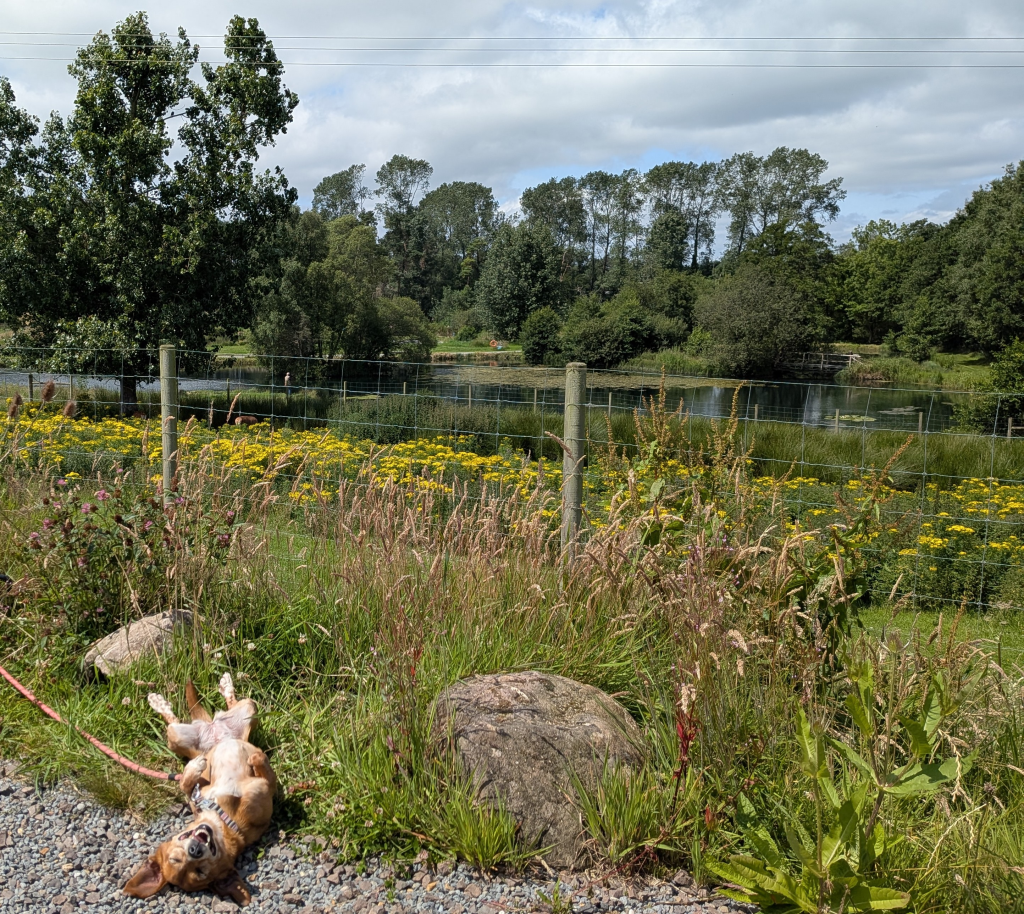
    keeping dogs cool in heatwave
    keeping dogs cool in heatwave