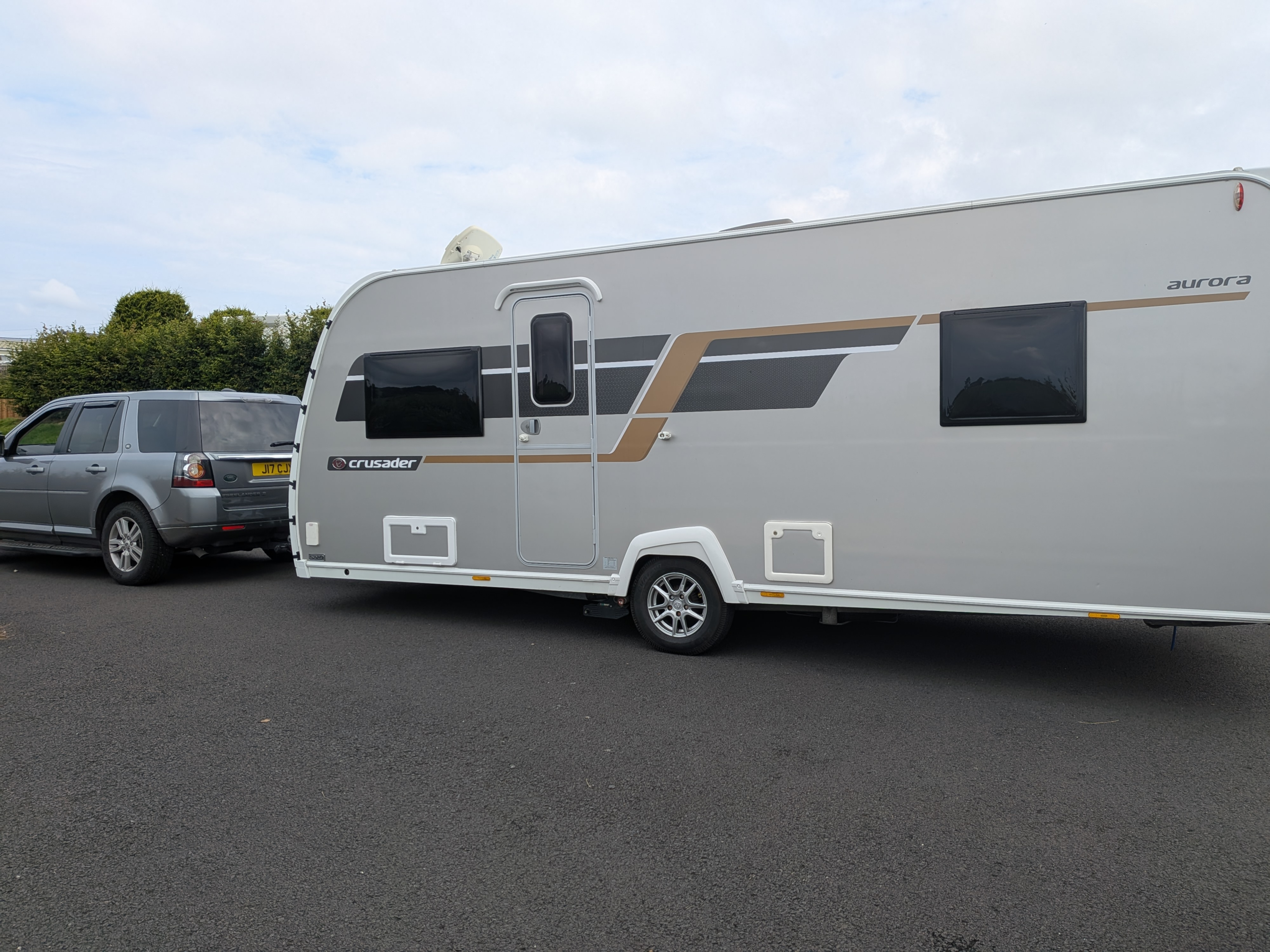
Storm-Ready: How to Prepare Your Caravan for Strong Winds (And Our Costly Lesson from a Stormy Night)
There’s nothing quite like the sound of rain gently hitting your caravan roof while you’re snuggled inside, warm and dry. But when the wind starts howling and your awning flaps like a sail, things can quickly shift from cozy to chaotic.
If you’re a fellow caravan lover like us—touring through all seasons, wind, rain, or shine—you’ll know that storms are an unavoidable part of life on the road (or even when you’re pitched up at home). We learned this the hard way a couple of years ago, when a freak storm hit and the neighbor’s shed roof came crashing down—straight onto our beloved caravan. We have also had some very hairy nights in Tollymore Forest Park in strong winds!
That stormy night left us with dents, holes, and a serious lesson in storm preparedness.
So today, I’m sharing everything we’ve learned about prepping your caravan for high winds, from awning safety to towing in storms, what to keep out of your “caravan garden,” and how to weatherproof your setup for peace of mind—whether you’re off-grid, on a site, or parked at home.
Contents
- Why You Need a Storm Plan
- Real-Life Storm Damage: Our Caravan vs. The Flying Shed Roof
- Wind Ratings on Awnings (And When to Take Them Down)
- Securing Your Caravan Setup Before a Storm
- Storm-Proofing Your Caravan “Garden”
- Towing Your Caravan in Windy Conditions
- Staying Safe Inside the Caravan During a Storm
- Insurance Tips After a Storm
- The Emotional Toll of Caravan Damage
- Final Thoughts: What We Do Differently Now
1. Why You Need a Storm Plan
Caravans may be our little home-on-wheels, but let’s face it—they’re not built like brick houses. Wind can be incredibly destructive, especially to lightweight materials like caravan panels, roof vents, awnings, and outdoor accessories.
Whether you’re touring full-time or simply use your caravan for holidays, having a storm plan is just as essential as your packing checklist. That includes:
- Knowing your awning’s wind limits
- Checking weather warnings before travel
- Knowing when to pack up and move
- Keeping your surroundings clear of hazards
You never think it’ll happen to you—until it does.
2. Real-Life Storm Damage: When a Shed Roof Hit Our Caravan
Let’s rewind two years. We were at home with our caravan parked in the driveway, just back from a weekend away. There were strong winds forecast, but nothing out of the ordinary for Northern Ireland these days!
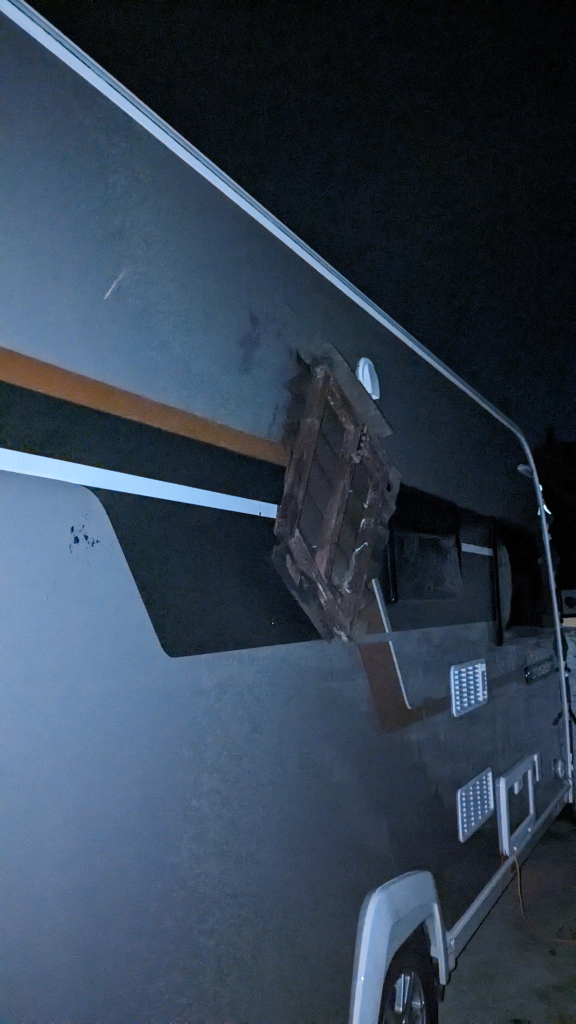
That night, the wind got stronger and stronger then a gust caught our neighbor’s old garden shed roof panel, and the roof panel lifted off like a lid on a tin can. It flew across the wall and slammed into the side of our caravan with terrifying force.
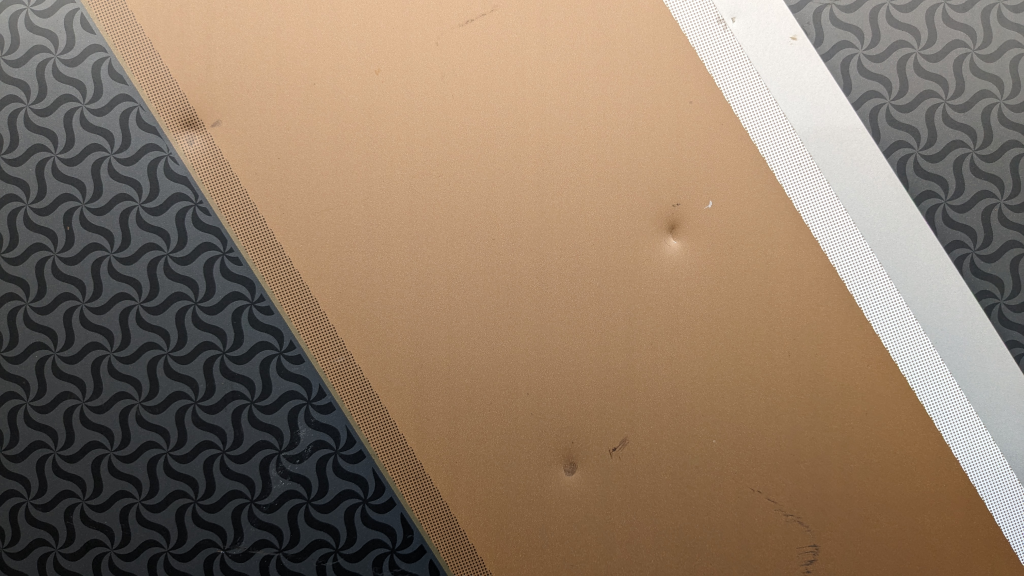
We heard the bang from inside the house, and ran out with torches. I’ll never forget the sinking feeling when we saw the side of our van—a panel of a shed roof stuck into the side of the van with several dents all over where the roof had hit. It dented part of the panel and put a hole in the side of the van.
3. Wind Ratings on Awnings: Know Your Limits
Awnings are one of the most vulnerable parts of a caravan setup during storms. Even premium air awnings have wind ratings, and once you exceed those, they become a liability—not a luxury.
Here’s a rough guide:
- Light wind (up to 15 mph / 24 km/h): Most awnings are fine
- Moderate wind (15–25 mph / 24–40 km/h): Pegs and guy lines must be secure
- Strong wind (25–35 mph / 40–56 km/h): Consider removing fabric panels
- Gale force (35+ mph / 56+ km/h): TAKE DOWN your awning completely
Even storm straps and heavy-duty poles can’t guarantee safety in a true storm. We now err on the side of caution—if winds are forecast above 30mph, the awning comes down.
Tip: Use a wind speed app like Windy or the BBC/Met office Weather app to check your location forecasts daily when touring.
4. Securing Your Caravan Setup Before a Storm
Whether you’re pitched on a site, in your garden, or parked on a CL, you should always do a pre-storm check. It doesn’t have to be complicated, just thorough.
Caravan Storm Checklist:
Awning removed or properly storm-strapped
All skylights and roof vents tightly shut
TV aerial down and secured
Chocks and steadies in place
Windows and doors locked
Loose outdoor items packed away
Water containers and waste tanks emptied or secured
Check caravan cover (if used) is tight and not flapping
Solar panels secure
Don’t forget your motor mover battery! If it’s loose or under strain, high winds can shift your van even when parked. We now have a battery monitor installed for extra peace of mind.
5. Storm-Proofing Your Caravan “Garden”
We all love setting up an outdoor space with chairs, rugs, plants, and little personal touches—but in a storm, these become flying projectiles.
Two years ago, we had planters, a small gas BBQ, and a garden gnome out. Luckily, we brought them in. Our neighbor didn’t, and we ended up with a plastic garden table smashed against the fence too.
Before a Storm, Secure or Store:
- Garden furniture (especially lightweight plastic)
- Plant pots or planters
- Dog bowls and toys
- Portable BBQs and gas bottles
- Fairy lights or solar stakes
- Bikes or scooters
- Steps and storage boxes
Everything should either be stowed inside the caravan or locked down tightly with ratchet straps or bungee cords.
6. Towing in Windy Conditions: Yes or No?
Towing a caravan in wind is not only difficult—it’s dangerous. Even the most experienced towers know that crosswinds are a serious threat on open roads and motorways.
Avoid towing if possible when:
- Wind speeds are over 30mph
- Crosswinds are expected
- The Met Office issues yellow or red warnings
If you must tow:
- Reduce speed
- Keep both hands on the wheel
- Ensure your caravan is loaded correctly (low and central)
- Use towing mirrors like our trusty Emuk XLs
- Avoid overtaking lorries in side winds
We once towed in 30/40mph winds on a rural route and it was white-knuckle stuff. Never again. If in doubt—stay put.
7. Staying Safe Inside the Caravan During a Storm
If you’re already pitched and a storm hits unexpectedly, don’t panic—but do take precautions.
Do:
- Close all windows and rooflights
- Secure blinds and curtains
- Turn off gas appliances
- Keep torches handy
- Charge devices in case of power outage
- If safe, move your car to block wind from the side of the van
Don’t:
- Don’t venture outside if you dont have to
- Leave children or pets unattended
- Use BBQs or gas heaters indoors (carbon monoxide risk)
We now keep a storm box in the van: torch, batteries, phone charger, first aid kit, a blanket, and emergency snacks. Peace of mind in one crate.
8. Insurance Tips After a Storm
If your caravan suffers damage, the insurance process can feel daunting—but it’s easier if you’re prepared:
After Storm Damage:
- Photograph everything immediately
- Note time/date/weather conditions
- Don’t move anything until you’ve documented it
- Call your insurance and ask about approved repairers
- Save receipts for any emergency fixes
Make sure your caravan insurance includes storm cover and accidental damage, even when parked at home. Also make sure you have the caravan insured for the right amount to.
9. The Emotional Toll of Caravan Damage
As much as we focus on practical prep, there’s an emotional side to all of this, too. If you’re anything like us, your caravan is more than just a vehicle—it’s your getaway, your sanctuary, a space full of family memories.
Seeing it damaged was honestly heartbreaking. We were angry, worried, and felt helpless. Although it was very much stressful it also taught us how resilient caravanners are, and how many lessons you only learn through experience.
It’s OK to be shaken by storm damage. What matters is how you move forward.
10. Final Thoughts: What We Do Differently Now
That storm changed how we caravan—especially in winter and autumn. We’re now vigilant with forecasts, we never leave the awning up in windy conditions, and we regularly check our surroundings for anything that could turn airborne.
Our New Must-Dos Before Any Storm:
Take down the awning
Store away anything light
Double check rooflights, windows, vents
Move the car to shield the van
Set internal supports (especially for skylights)
Charge devices and grab our storm box
And every time a strong wind hits now, we’re grateful we learned our lesson the hard way—because we’ll never take the weather for granted again.