When Routine Maintenance Goes Wrong
Bringing your caravan in for its annual service should be a straightforward task — routine, even. You expect peace of mind, safety, and reassurance that everything is road- and site-ready. That’s exactly what we thought too. But what unfolded next turned into one of the most stressful — and potentially dangerous — caravan experiences we’ve ever had.
In this post, we’re sharing our personal story of how a caravan battery overheated to the point of near-disaster after its annual service, what we learned about battery grades, and the essential safety steps we now take to avoid a repeat. Whether you’re new to caravanning or a seasoned explorer, we hope our experience helps you stay safer and more informed.
The Setup: Post-Service and a Narrow Escape (Literally)
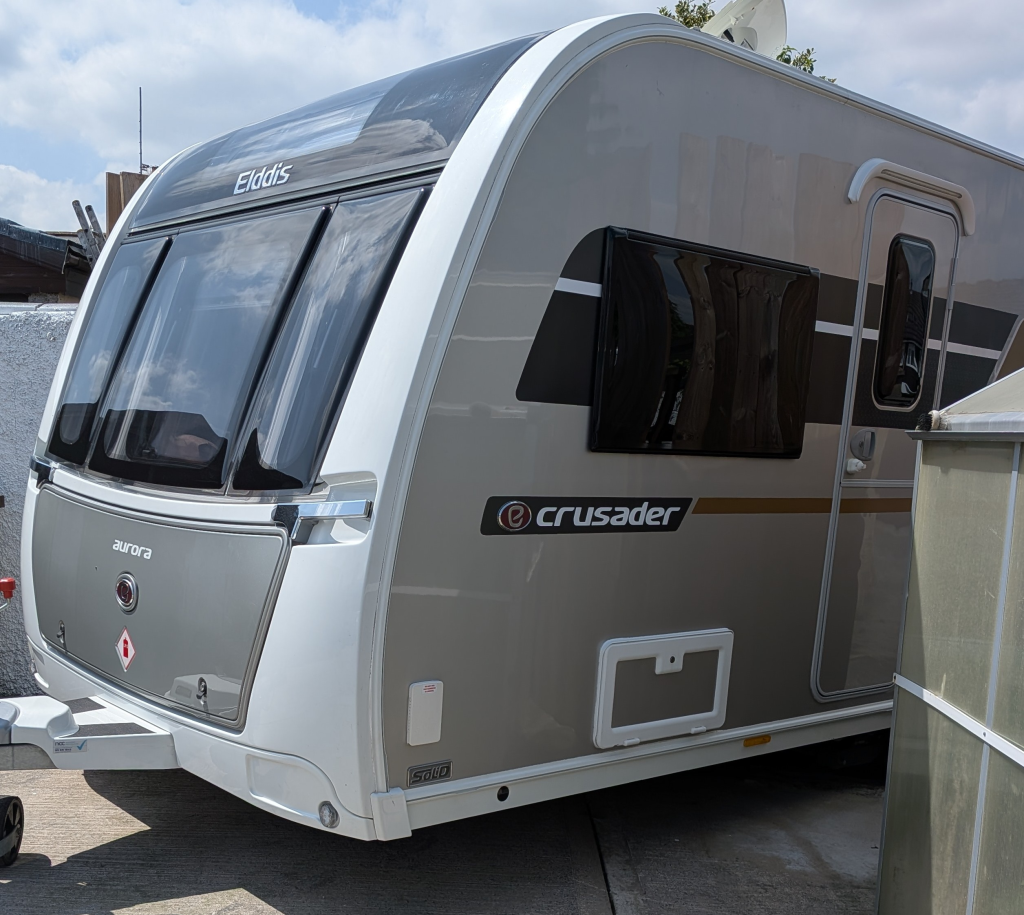
We had just collected our caravan after its routine service — nothing seemed out of the ordinary. As usual, we brought it home and unhitched on the lane near our house. Our lane is narrow and slightly inclined, so we always use the motormover to straighten and reposition the van before hitching it back up to tow into our back garden.
The plan was simple:
- Unhitch
- Use the motormover to line up the caravan
- Reattach and tow it up to the gate and use the motor mover the remainder of the way (Cant be towed into place)
Only, that didn’t happen.
Warning Signs: A Beeping Alarm and a Stubborn Motormover
As soon as we unhitched and engaged the motormover, it began beeping — loudly and repeatedly. We assumed it was just the remote battery needing a change. Swapped it. Same problem. The motormover would start for a few seconds, then cut out again. More beeping. We fought with it, manually adjusting, retrying again and again.
Eventually — after a lot of sweat and stress, and more than a few puzzled looks from passersby on our narrow road — we managed to line the caravan up just enough to hitch back up and pull it into our garden. The sense of relief was short-lived.
Part Two: The Caravan Refuses to Cooperate Again
With the van in the garden, we had to unhitch again and use the motor mover one more time to get it into position. Same issue. A few seconds of movement, then cutting out. Constant alarm beeping.
We checked the onboard control panel — low battery warning.
That was odd. The caravan had just returned from its service. We were specifically told them to ensure the battery was charged before we brought it back home!
We grabbed the electric hook-up cable and connected the caravan to mains power. After waiting a while, we tried the motor mover again. It lasted marginally longer but failed just the same. After about an hour of struggling, worrying we were blocking the lane too long, and unable to manually push due to the incline (and weight), we finally got it into its resting spot.
We thought the worst was behind us.
The Smell No One Could Ignore
The next day, I went out to repack the caravan after emptying it for the service. I plugged in the electrics, tidied up, and went about my usual routine. Everything seemed fine.
A short time later, my partner noticed the caravan’s alarm going off again. Curious, they went out and said there was a weird smell — blaming me for leaving something stinky inside. We aired it out and thought nothing more of it.
Then came the rain.
We closed the door, and after a while, I went out to grab something from the van. As soon as I opened the door, the smell hit me — like a punch in the face.
It was the unmistakable stench of rotten eggs. The air inside was thick with it, and it was overwhelmingly hot. My stomach dropped. I knew something wasn’t right. I remembered hearing somewhere that overheating batteries can give off that smell due to hydrogen sulphide gas.
I ran to unlock the battery locker.
A Near-Disaster: The Overheating Battery
As soon as I opened the battery compartment, I could feel the heat pouring out. The locker was boiling and the smell was horrific. I instantly shut everything down and rushed back inside to get my partner, shouting that the battery was about to explode.
But we couldn’t remove it straight away — it was too hot to safely touch. We had to wait for it to cool down, constantly checking in the meantime, hoping it wouldn’t burst or catch fire.
Eventually, the battery cooled enough to disconnect and safely remove it from the caravan. It was a terrifying experience and could have ended far worse than it did.
Diagnosis: What Went Wrong?
So what actually caused the battery to overheat to such a dangerous extent?
- The service team told us the battery “read fine” during its check.
- We knew it was working perfectly before it went in.
- It hadn’t been drained on our end — we never let it run flat.
We eventually got the old battery tested. The verdict? It had likely been allowed to drain completely at some point (possibly during the service), then recharged too quickly — a known cause of internal damage. This can lead to gassing, overheating, and irreversible chemical breakdown.
But there was another revelation…
The Hidden Issue: We Had the Wrong Battery Type All Along
Our caravan had come with a leisure battery — as most do. But until now, we had no idea there were different grades of caravan batteries, each suited to specific uses.
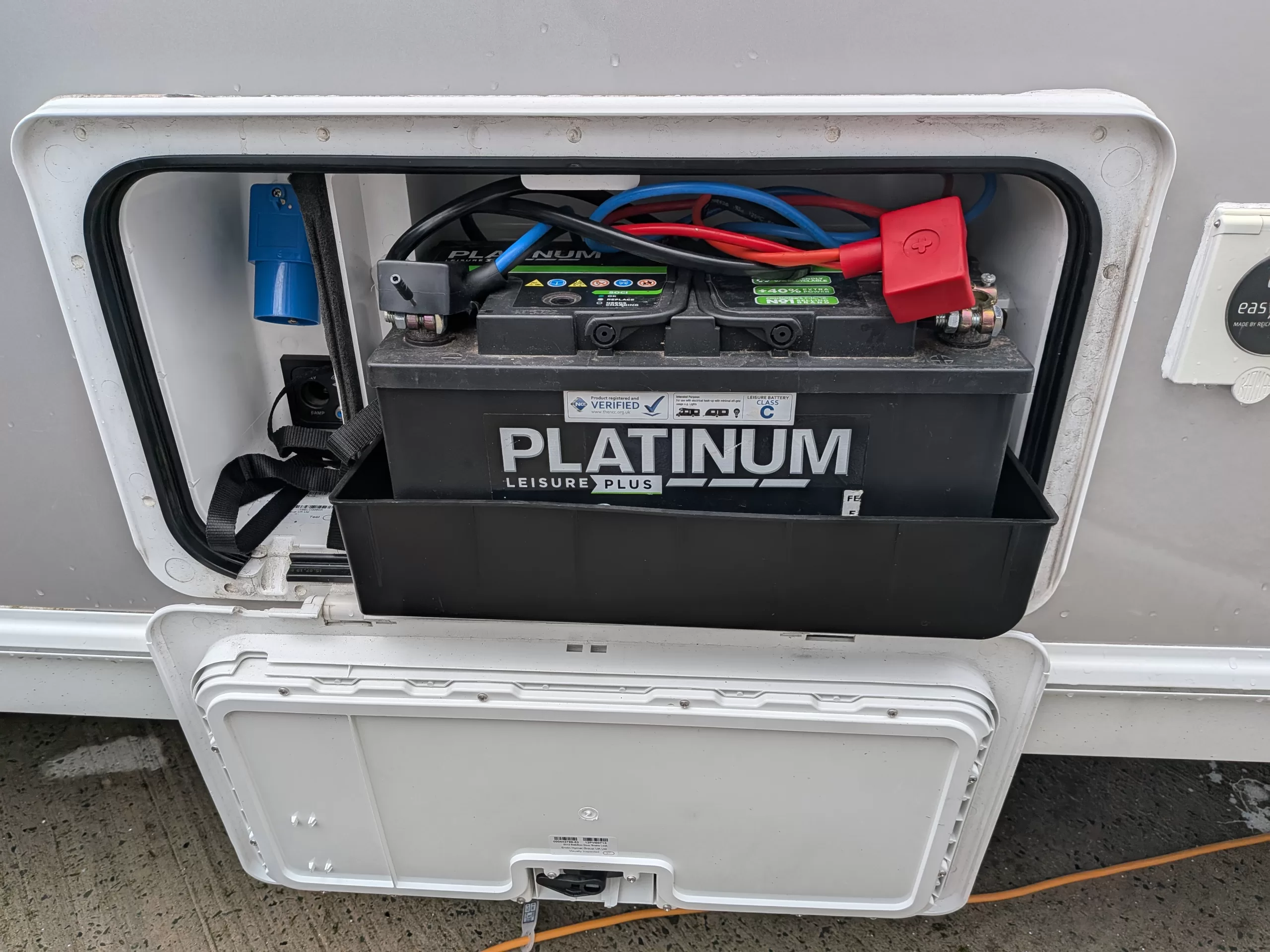
Our battery was a Grade C.
These are generally budget leisure batteries designed for light use — not the kind of deep, repeated discharge required by a motormover. Running a motormover places a huge strain on the battery, requiring a more robust, deep-cycle solution.
Let’s break this down:
Understanding Caravan Battery Grades
Caravan batteries are graded into three main categories:
🔋 Grade A (Best for Heavy Use)
- Deep cycle AGM or Gel batteries
- High charge/discharge cycles
- Withstand motormover use and off-grid living
- Long life (often 5+ years)
- Great for frequent touring and off-grid users
🔋 Grade B (Medium Use)
- For regular but lighter discharge
- Good for short breaks or site with hook-ups
- Decent lifespan and reliability
🔋 Grade C (Light Use Only)
- Best for site-only users with full EHU
- Not designed for motormovers or off-grid power
- Cheapest — but also most limited
We realised our Grade C battery was never designed for the heavy strain we were putting on it. And somehow, it had lasted this long — until it didn’t.
What We Did Next: Upgrades and Safety Measures
After researching deeply, we purchased a high-quality Grade A AGM battery built to handle motormover demands and prevent deep discharge damage.
But we didn’t stop there.
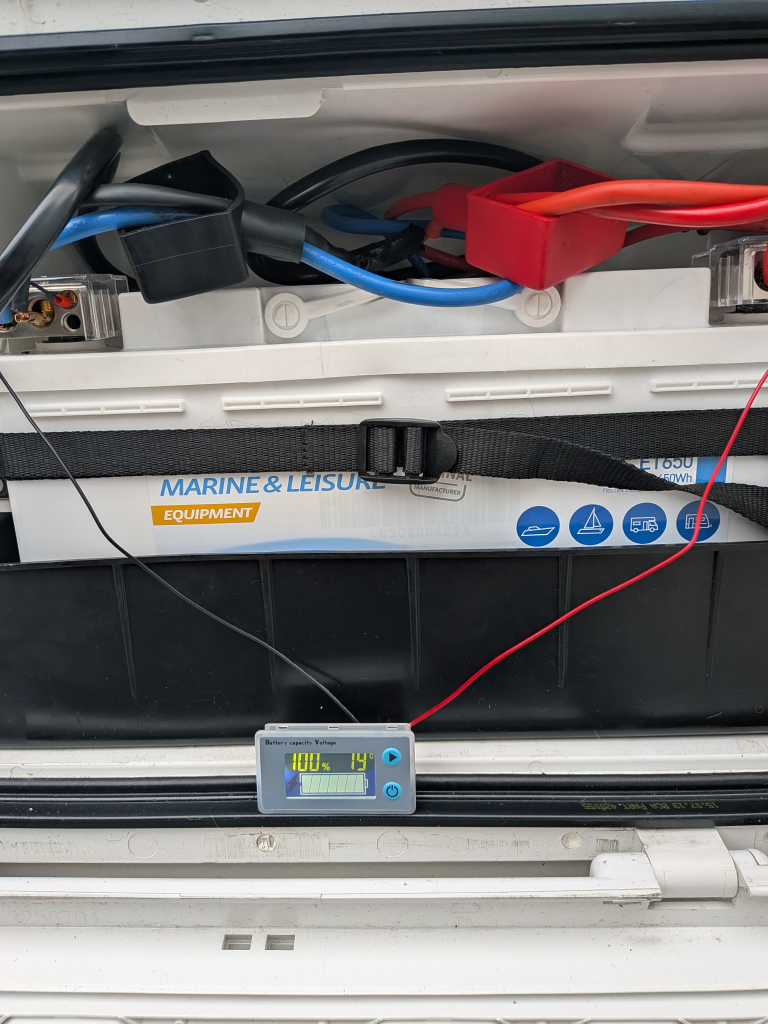
We also installed a battery monitor — an absolute game-changer. It now shows us:
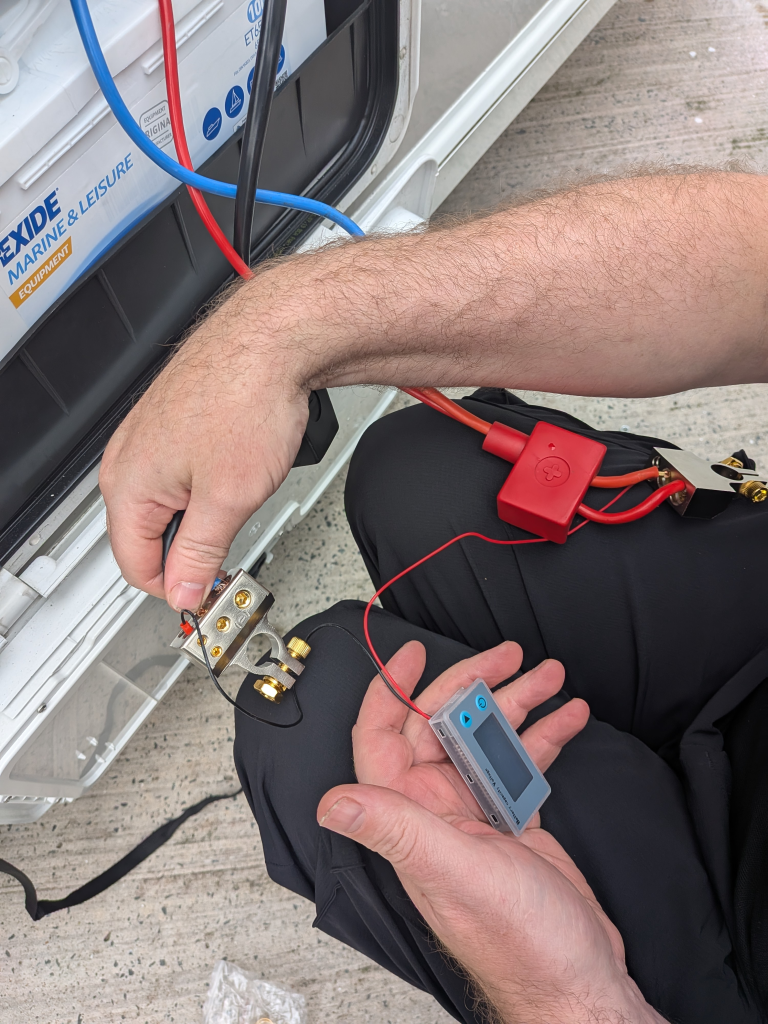
- 🔋 Charge level (%)
- 🌡️ Temperature (a key overheating warning)
- ⚡ Voltage (to detect drops or faults early)
We can now track the battery’s condition in real-time. No more guessing. Here is the link to the one we purchased here. ~ Affiliate Link
You can buy Bluetooth ones which connect to your phone via Bluetooth ~Affiliate Link
Please do your research on your battery and its needs and which battery monitor is best suited or contact a proffesional for advice.
What We Learned (So You Don’t Have To)
- Always double-check your battery grade.
Just because your caravan came with it, doesn’t mean it’s suitable — especially if using a motormover. - Low battery warnings should never be ignored.
If your motormover is failing or alarms are going off, don’t assume it’s the remote — check the actual power supply. - Rotten egg smell = danger.
Hydrogen sulphide is highly flammable and toxic. If you ever smell this inside your caravan, switch off power immediately and ventilate. - Battery monitors are worth every penny.
Prevention is cheaper (and safer) than battery replacement — or worse. - Even serviced caravans need a post-check.
Just because a workshop says your battery is “fine” doesn’t mean it is. Check for yourself. - Proper ventilation is crucial.
Battery lockers should allow gasses to escape — make sure your venting is working.
Conclusion: A Costly Lesson, But a Valuable One
We ended up spending money on a new battery and monitor — but we’re grateful that’s all it cost us. A battery explosion could have set the caravan alight or worse, especially if it had happened overnight or while we were travelling.
What started as a routine service turned into a serious safety scare — and a wake-up call about battery health, proper equipment, and caravan preparedness.
Have You Checked Your Battery Lately?
If this post has given you pause, do yourself a favour — open your battery locker and check:
- What grade is your battery?
- Is it warm to touch after charging?
- Do you smell anything odd?
- Do you know its voltage/charge level?
Don’t wait until something goes wrong. See our post on Importance of servicing you caravan here.